歷史網站|Historical Website:

喬麗歌 Qiao Lige(中國|CN)
十方青年駐留藝術家|DAC Emerging Resident Artist
駐留週期|Residence Period:
2025.12.11 - 2026.1.10
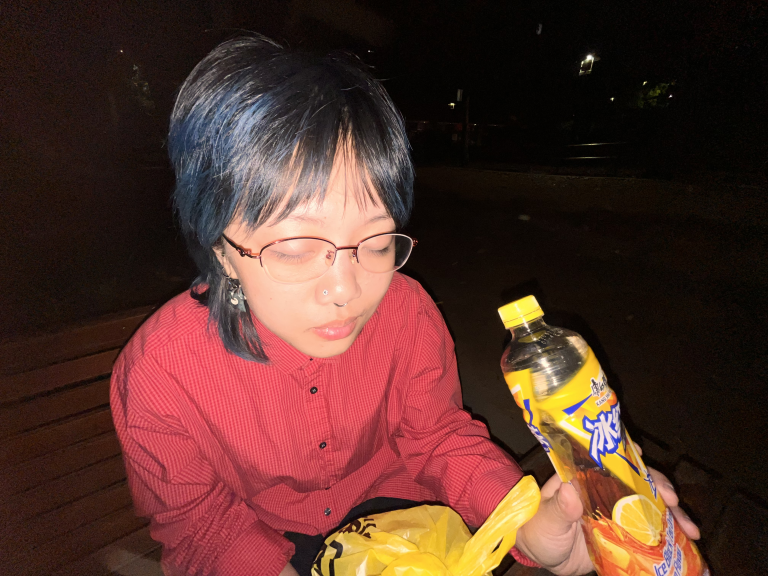
藝術家簡介|CV of the Artist:
喬麗歌(b.2000),山西太原人,現工作與生活於Gadigal土地(所謂的悉尼)。畢業於新南威爾士大學藝術學院,擁有一等榮譽學士學位。
其創作包括影像、裝置、行為藝術及多種跨學科媒介,特別是lens-based的方式。在海外生活期間,ta開始思考故鄉和家的含義,並逐漸將自身和家族的漂泊經歷聯繫起來,形成一種由母系家族囤積習慣衍生的創作方法論。受到網絡社群和離鄉生活的影響,其作品常涉及電子文化、身份探索以及語言和翻譯。ta最近在探索“電子同步”與“文本的物質性”。麗歌是Sara Ahmed和Gayatri Spivak文字作品的狂熱愛好者。
Lige is a Gadigal-based emerging artist (and curator, sometimes) who constantly contemplates suburban landscapes. Their practice revolves around the locational lived experience in Northern China and the influence of digital culture. Working with language and translation, they seek to explore the intricate connection between temporality and presence through video-based synchronisation.
關於本次駐留|About Residency:
我希望此次駐留項目可以呼應重慶獨特的地理景觀,並與其多樣的公共交通系統相連接。我之前來重慶旅遊時發現這座城市的交通系統非常神奇,尤其是軌道系統,即便悉尼的軌道系統也很發達,但是乘坐體驗遠不如重慶詩意。重慶的景觀豐富多樣,公共交通工具也同樣如此。我記得某次乘坐輕軌過江,腳下的江水被重慶的霧氣籠罩,過江橋樑上車輛來了又走,感覺時間的流動變得很飄渺很短暫,但同時又令人難以忽視。我以前去重慶都是作為遊客,對我和同行的朋友來說,重慶特殊的交通系統便成為了景觀的一部分,意味著這種對於本地人來說的日常在其他語境下(也就是外人來重慶遊玩)變得特殊,甚至是稀少。乘坐公共交通從一種普通的出行方式變成了一種可以不被忽略的、有觀賞和美學價值的體驗,這件事本身讓我覺得很神奇。
在我2023年的影像作品《Gift》中,我融入了我姥姥,我母親和我在不同空間的日常通勤方式,以此隱喻我母系家族一生中不斷地遷徙,更確切地說是一種長久的移動的經歷。如果說得深一點,我認為所謂的“通勤”是一種更具體、更顯形的移動和遷徙形式。我成年後基本都生活在所謂的澳大利亞,在藝術學院上學要讀很多後殖民理論和離散文學,其中很多都在反思自身的位置,以及自身和地點的關係,比如澳大利亞對原住民的殖民,以及原住民們如何被迫遠離自己的家和土地(ancestral land)。在我的創作中“移動”是一種非常個人化的東西,它可以代表一種離開也可以代表一種到來。作為一個遠離家鄉的人,我持續不斷地移動著,比如回家、回悉尼、回老家(我姥姥的故鄉嵐縣),我覺得這種移動和通勤很相似。在這些旅程中,我搭乘交通工具這件事意味著接近“目的地”,這是一個我們通常比實際的旅程本身更看重的地點。乘坐交通就像窺視不久的將來,包含著一種不確定性,這也是我喜歡乘坐公共交通工具的另一個原因。
雖然交通並不算是我作品裏一個新的元素,比如上面提到的Gift,還有我的三聯畫《我,父親,白樺林》中的綠皮火車(2022年),但是直到今年,我才逐漸意識到我的創作和交通之間的關係。可能是因為交通作為一種日常行為太過於普遍,以至於忽略它的意趣變成了一種常態。當這種潛意識的關聯逐漸顯形,很多我在創作過程中看似自發的選擇都有了原因。
I envision the work for this residency to be a project that responds to the unique landscape of Chongqing, and connects to its dynamic public transportation system. I’ve visited Chongqing for a few times before and find the city’s transportation system to be quite fascinating, especially the railway system. Chongqing’s landscape is so diverse, as is the means of public transport. I remember riding the metro/subway/轻轨 across the river and seeing the water camouflaged by the smoke-like Chongqing fog; passing by the cross-river bridges that had endless vehicles from two sides of the shores, it was mesmerising.
In my 2023 video work Gift, I included different ways of daily commuting to metaphorically represent the migrating – more holistically saying moving – experiences throughout my matrilineal family’s life. In other words, I think of commuting as a more tangible and physical form of moving and migrating. I spent most of my adult life in so-called Australia; I am conditioned to this Western mode of diasporic narratives, and these fixtures of being (seen as) in diaspora led me to think about the locality of sites. Movement is a very personal stance for me when making art. As a person who semi-deliberately displaces themself, the almost continuous movement – travelling back home, travelling back to Sydney, travelling back to 老家Laojia (my grandmum’s hometown) – shares similarities with the form of commuting. In these journeys, being in transport insinuates being close to the ‘destination’ – a site we usually value more than the actual journey of being in transport. To use transportation is like peeking into the near future; the uncertainty in this process is another reason why I am drawn to transport.
When I’m in transport to somewhere, time somehow stops – or to say, pauses – because the ‘destination’ seems to be where time starts moving again. The static temporality that we as passengers experience when being in a machinery, in a mechanical composition of movement, becomes non-existing. I am interested in this often overlooked pause. The pause here is more than a pause of time, it is also a disrupture of the established spatial relations within the transport. The means of the transport thus is converted to an othered space. However, once a tool of transportation is manufactured; it occupies space innately. A concept given by Foucault, heterotopia, aligns with this deeply juxtaposed configuration of transport. I directly quote him here: “The heterotopis begins to function at full capacity when men arrive at a sort of absolute break with their traditional time.”[Michel Foucault, “Of Other Spaces (1967), Heterotopias.,” accessed September 27, 2025, https://foucault.info/documents/heterotopia/foucault.heteroTopia.en/.]
How Chongqing’s railway system is advertised as a tourism attraction is also something I hope to investigate. One example I can think of is 李子坝Liziba (and the related career paths emerged from its craze online). I would like to document and explore the public transportation within/to Huangjueping through various lens-based approaches.